Mountain Transit · Website case study

Powering a mountain transit agency, from its website to its live bus data

Nine years as Mountain Transit's technology partner. We rebuilt the website, managed the rollout of a real-time bus tracking system, got the agency back on Google Maps, and now power every route page from live transit data.

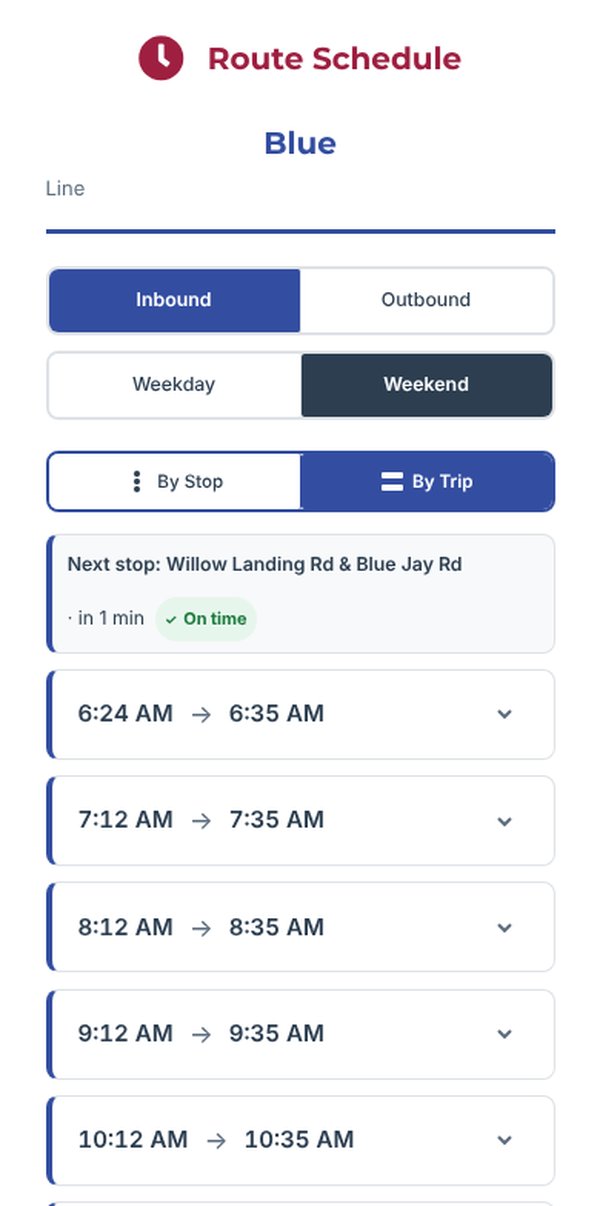
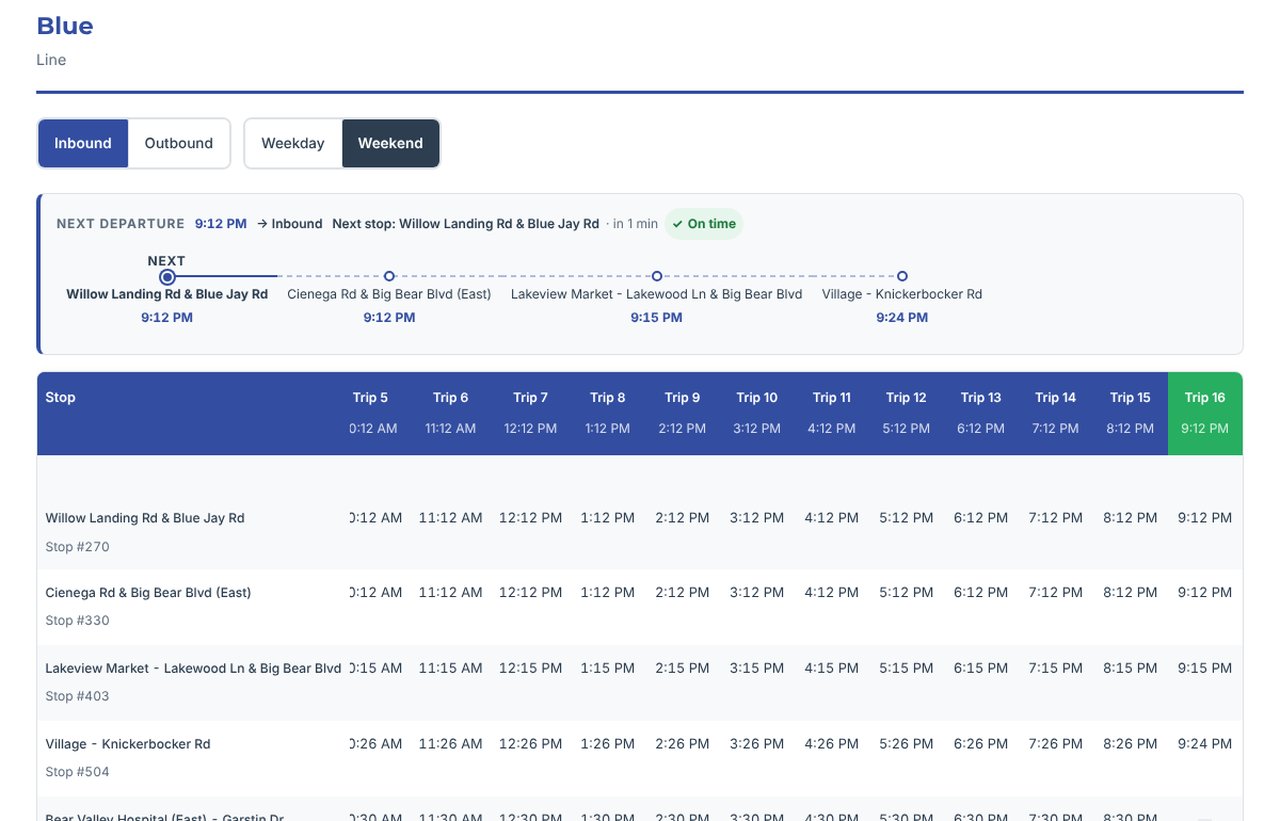
A Mountain Transit route schedule for the Big Bear Blue Line, showing the next departure at 9:12 PM marked "On time," the next four stops with arrival times, and a full timetable of trips below.

Key outcomes

9 years
as Mountain Transit's technology partner, across successive scopes of work since 2017
81,000+
people used mountaintransit.org in the last year, more than half of them on phones
7
hand-maintained website features now generated automatically from live transit data
3
trip-planning platforms, including Google Maps, confirmed carrying the rebuilt schedule feed

Project at a glance

Client
Mountain Area Regional Transit Authority (Mountain Transit), the public transit agency for the San Bernardino Mountain communities of Big Bear Valley, Lake Arrowhead, Running Springs, and Crestline
Audiences
Residents, seniors and riders with disabilities, students, workers commuting off the mountain, visitors and skiers, the agency's board, and regional transportation partners
Services
UX and web design, WordPress development, vendor and technical program management, GTFS data management, accessibility, rider communications, and ongoing support
Platform
WordPress with Elementor Pro and GTFS One, our transit data platform for WordPress
Integrations
GMV Syncromatics real-time tracking and rider app, Remix (GTFS), Google Maps, Moovit, Transitland, and Google Translate
Timeline
Partner since 2017. Website redesign launched February 2021; real-time system rollout November 2023 to November 2024; data feed rebuild in 2025; GTFS One launched October 2026
Standards
GTFS and GTFS Realtime; accessibility built into every phase, with WCAG 2.2 AA as the target for GTFS One
Engagement
A long-term partnership under successive scopes of work, including a monthly maintenance retainer. Client reference available on request.

The challenge

Mountain Transit connects the communities of the San Bernardino Mountains to each other and to the valley below, with fixed routes, off-the-mountain service, free trolleys, and Dial-A-Ride. Riders include residents, seniors, students, workers, and visitors heading to the lakes and ski resorts. For many of them, the website is the first place to check where the bus is and when it's coming, often from a phone on a mountain road.

When we began working together, the agency's digital presence had grown in pieces:

  • A fragile website. The previous site had passed through many developers. Conflicting code meant routine updates could break it, and it wasn't built for phones.
  • A changing technology stack. In 2023, the agency procured a new real-time system for tracking buses, onboard announcements, dispatch, and a rider app. A small team had to replace the old tracking service without leaving riders without information.
  • Trip planners out of step with reality. Mountain Transit's listing on Google Maps had gone inactive, and regional partners noticed that trip-planning results didn't match current service.
  • Too many sources of truth. Schedules lived in transit scheduling software, a vendor dashboard, hand-built website tables, and designer PDFs. Every service change had to be re-keyed in several places, and they could drift apart.

Our approach

Our work with Mountain Transit has grown one scope at a time. Each phase solved the problem in front of the agency and set up the next one, from a stable website, to a new real-time system, to clean data, to a website that runs on that data.

  1. Phase 1

    Redesign and rebuild the website

    We replaced a fragile site with a new, mobile-friendly WordPress site, designed around the tasks riders come to do.

    Key deliverables

    • Requirements gathered with the agency's marketing and planning staff, plus a review of peer transit agency sites
    • Wireframes and mockups reviewed in rounds with Mountain Transit
    • A "Plan Your Trip" tool on the homepage, a site-wide alert bar, and clearer menus separating year-round and seasonal routes
    • Integrations with live bus tracking, mobile fares, GTFS, and Google Maps trip planning
    • Accessibility work built into the rebuild, and staff tools for board documents and job openings
  2. Phase 2

    Run the website day to day

    Since launch, we've kept the site current under a monthly maintenance retainer, acting as an extension of the agency's team.

    Key deliverables

    • Service alerts, detours, and timetable updates, often on short notice
    • Board agendas, minutes, and procurement notices
    • Plugin, security, and performance maintenance
    • New pages for new services, such as the Trolley to Trails route in 2026
    • Google Translate across the site
  3. Phase 3

    Manage the real-time system rollout

    When Mountain Transit adopted GMV's Syncromatics system, the agency engaged us as its technical program manager and main point of contact with the vendor for 13 months and more than 600 hours of work.

    Key deliverables

    • Weekly vendor meetings, action tracking, and on-site coordination in Big Bear and Crestline
    • Data, configuration, and logistics support for installation across the fleet
    • Retirement of the previous tracking service and integration of new live tracking on the website
    • Rider communications, including the launch press release and website updates
    • Beta testing of the rider app, with documented feedback on usability and accessibility
  4. Phase 4

    Rebuild the transit data feed

    We cleaned up Mountain Transit's GTFS schedule data and brought it back onto the platforms riders use to plan trips.

    Key deliverables

    • Fixes for the issues in Google's validation report, from duplicate stops to missing holiday service
    • Google Transit onboarding and preview testing with Mountain Transit staff
    • A move of the public feed to Remix, with notices to Google, Apple Maps, Bing, Transit, Transitland, and Moovit
    • Training for the agency's data staff on maintaining the feed
  5. Phase 5

    Run the website on live data with GTFS One

    We audited every schedule source, then connected the website directly to the agency's live data with GTFS One, our transit data platform for WordPress.

    Key deliverables

    • A route data audit comparing four sources across eight routes
    • Route pages generated from GTFS, with maps, timetables, fares, alerts, and PDF route guides
    • Next-departure and on-time status from real-time data
    • Alerts posted once by dispatch, shown in both the rider app and on the website

What we built

Every route page, generated from live data

GTFS One reads Mountain Transit's published schedule feed every day and builds each route page from it. When the agency changes a schedule in its scheduling software, the website follows. Nobody has to re-key the timetable.

  • Live next departure: the next bus, its upcoming stops, and whether it's on time or delayed
  • Timetables by stop or by trip, with weekday and weekend service and the direction riders are traveling
  • Interactive route maps with live bus positions
  • Fares, alerts, and a downloadable PDF route guide, all generated from the same data
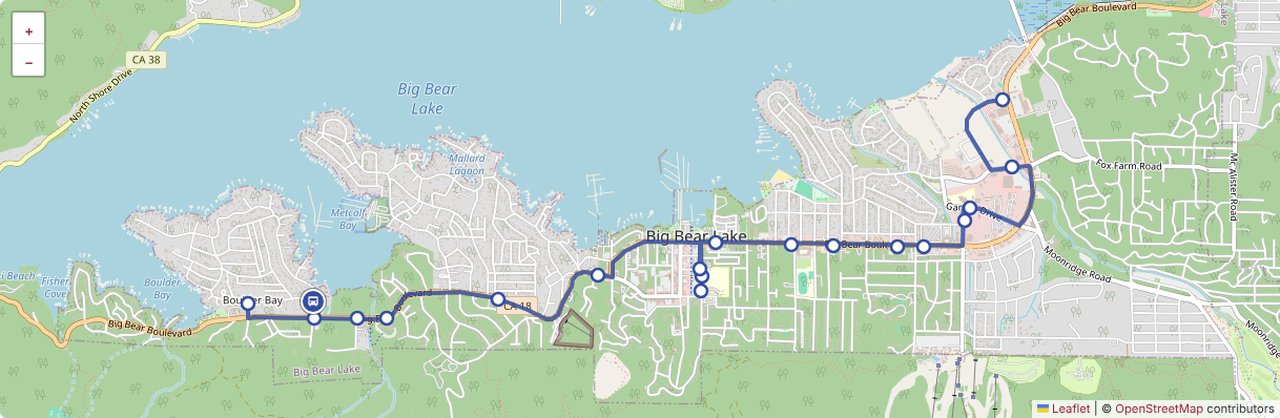
An interactive map of the Big Bear Blue Line, tracing the route along the south shore of Big Bear Lake from Boulder Bay to the Village, with stops marked and a live bus icon near Boulder Bay.The Blue Line schedule on a phone, with Inbound and Weekend selected, a next-stop card marked "On time," and a list of trips by departure time.

A real-time system, launched with the agency

In 2023, Mountain Transit procured a real-time system covering vehicle tracking, onboard announcements, driver tablets, dispatch software, a public tracking map, and a rider app. As the agency's technical program manager, we:

  • Served as Mountain Transit's main point of contact with the vendor, from kickoff through installation and the months after launch
  • Coordinated data, configuration, and logistics with the agency's operations, data, and marketing staff
  • Retired the previous tracking service and switched the website to the new live map
  • Wrote the press release announcing live tracking and the new app
  • Tested the rider app before launch and documented usability and accessibility issues for the vendor to fix

Back on Google Maps, and in step with it

Mountain Transit's Google Maps listing had gone inactive, and its schedule data had fallen out of step with current service. We worked through Google's validation requirements with the agency's staff, added holiday service, standardized stop names to match the website, and published a clean feed.

In October 2025, Google confirmed the feed was live on Google Maps, and Moovit and Transitland now carry it too.

An audit that found the gaps

Before connecting the website to live data, we compared Mountain Transit's four schedule sources (two GTFS feeds, the website's timetables, and the printed route guides) across eight routes. The audit found 41 discrepancies, 11 of them critical, and gave each one a recommended fix. It became the plan for making the feed the single source of truth.

A website the agency's staff can rely on

Since the 2021 relaunch, we've handled the day-to-day work that keeps a public agency's website trustworthy: detours and service alerts, board agendas and minutes, procurement notices, new routes, and translation for riders who prefer another language.

Before and after

Before

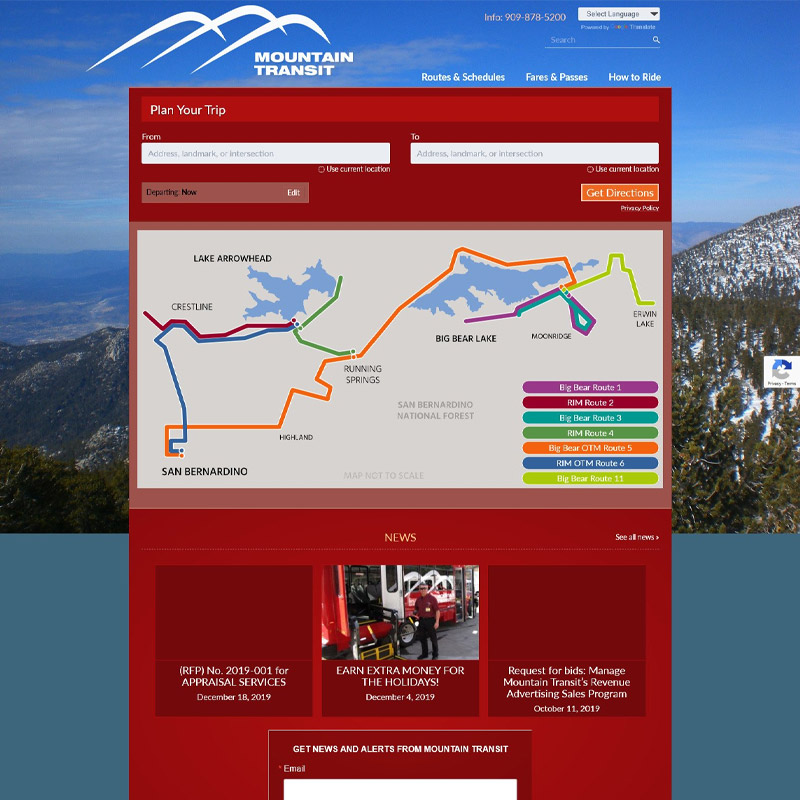
The previous Mountain Transit homepage, around January 2020, with a red "Plan Your Trip" box over a mountain photo, a static map of seven routes, and three news items from late 2019.

After

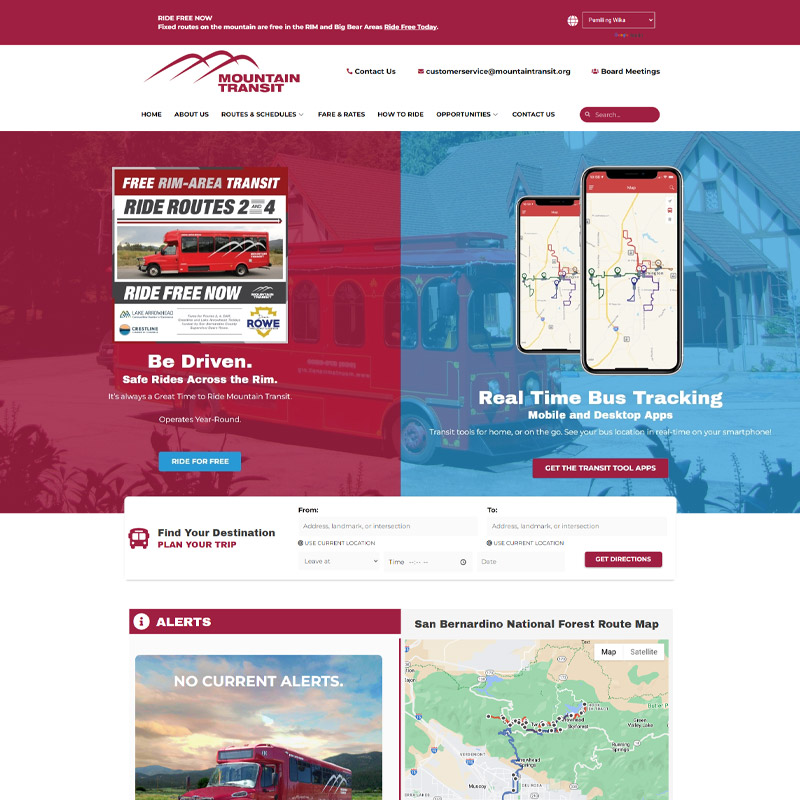
The redesigned Mountain Transit homepage from 2021, with a "Ride Free Now" banner, a real-time bus tracking promotion showing phone screenshots, a "Find Your Destination" trip planner, an alerts panel, and an interactive route map.
Homepage. The previous site centered on a static system map. The 2021 redesign put trip planning, real-time tracking, current alerts, and an interactive regional route map on the homepage.

Results

The redesigned mountaintransit.org launched on February 1, 2021, and has since grown into the agency's main channel for riders. In the 12 months ending September 2026, more than 81,000 people used it, and route and schedule pages drew more than a third of all page views.

Behind those pages, the data now flows one way. The agency's schedule feed went live on Google Maps in October 2025, and on October 19, 2026, GTFS One began generating Mountain Transit's route pages, timetables, maps, fares, and alerts from that same feed.

Goals, what we delivered, and the evidence
GoalWhat we deliveredEvidence
Riders find what they need, especially on phonesA mobile-friendly redesign, then route pages with live next departures, on-time status, and interactive mapsMore than 81,000 people used the site in the last year, 51% of them on phones. Route and schedule pages drew more than a third of all page views.
Staff publish updates without breaking the siteA stable WordPress rebuild with an alert bar and staff tools, plus ongoing support under a maintenance retainerThe site has carried alerts, detours, board documents, and new routes since its February 2021 launch.
A smooth switch to the new real-time systemTechnical program management from vendor kickoff through launch, including vendor liaison, website integration, and rider communicationsOver 13 months and more than 600 hours, the agency retired its previous tracking service and launched live tracking and a rider app, announced with a press release we wrote.
Trip planners match actual serviceA cleaned, validated GTFS feed with holiday service, distributed to six trip-planning platformsGoogle confirmed the feed live on Google Maps in October 2025. Moovit and Transitland also confirmed they carry it.
One source of schedule dataA four-source route data audit, then GTFS One connecting the website to the agency's published feedSeven features that staff once updated by hand are now generated from the feed and refreshed daily.

Sources: Google Analytics 4 for mountaintransit.org, October 1, 2025 to September 30, 2026; Google Transit, Moovit, and Transitland confirmations, September and October 2025; Digital Mountaineers route data audit, May 27, 2026. Before screenshot from about January 2020; homepage after screenshot from 2021; route page screenshots from mountaintransit.org, October 24, 2026.

In their words

We have all found the DM staff to be knowledgeable, responsive and professional.

— Sandy Benson, General Manager, Mountain Transit ·Read the review on Clutch (opens in a new tab)

Digital Mountaineers, LLC.'s team is extremely knowledgeable and willing to explain how to improve things. I find their willingness to communicate and explain how to make things easier in the future an impressive and valuable trait.

— Racheal Settje, ADA Coordinator, Mountain Transit ·Read the review on Clutch (opens in a new tab)

An ongoing partnership

We remain Mountain Transit's web and transit data partner. Each month we keep the site current, maintain the schedule feed with the agency's data staff, and add GTFS One features as the agency needs them, starting with improved route guides, automated site-wide alerts, a stop finder, and trip planning.

Is this project like yours?

This case study is most relevant if your organization:

  • Is a transit agency, special district, or other public agency with a small staff and many vendors
  • Is rolling out a new real-time, CAD/AVL, or rider app system and needs someone to own the details
  • Has schedules that don't match between its website, its GTFS feed, and Google Maps
  • Updates timetables, maps, or PDF route guides by hand after every service change
  • Needs a long-term web partner, not a one-time project

Capabilities demonstrated

  • UX and web design
  • WordPress development
  • Technical program management
  • Vendor management
  • GTFS and GTFS Realtime
  • Google Transit onboarding
  • GTFS One
  • Accessibility
  • Rider communications
  • Ongoing support

Planning a redesign or issuing an RFP?

We'd welcome the chance to bid. Tell us about your timeline and requirements, and we'll share relevant work, references, and an approach tailored to your organization.

← All our work